All
Behind the Investments
Why we invested in EQON
Turning the on/off switch of industrial heating into a precision dial
Heat accounts for almost half of the world's final energy use, and around 40 percent of energy-related CO2 emissions. It is one of the most stubborn problems in the energy transition, and at the control layer, it has seen almost no innovation.
A large share of the world's industrial and infrastructure heating, including the heat trace cables that keep pipelines, rail switches, offshore platforms and process equipment from freezing, is still controlled the same way it has been for decades: with a binary thermostat that is either fully on or fully off, regardless of how much heat is actually needed.It is the electrical equivalent of a light switch in a world that moved on to dimmers long ago.
A dimmer switch for industrial heat
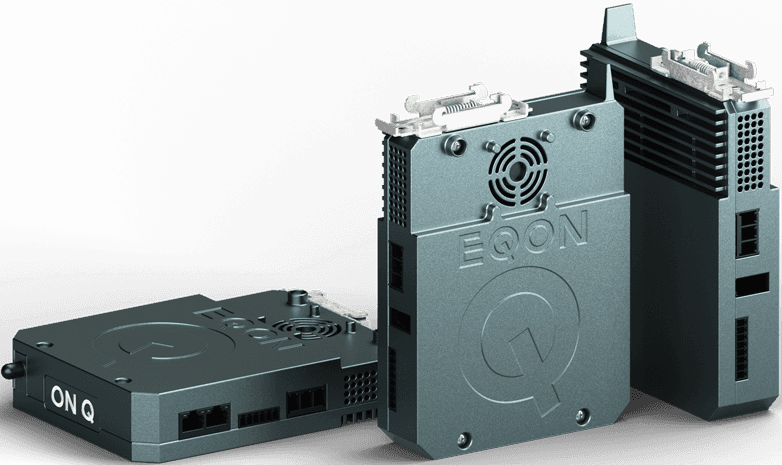
EQON has developed a patented dimming solution. Instead of switching a circuit fully on or off, the system delivers intelligent, real-time power regulation, providing only the heat needed at any given moment.
The result is a step change in efficiency: EQON's technology cuts energy use and CO2 emissions by up to 80 percent, alongside real-time digital monitoring and predictive maintenance that can flag a failing cable before it fails.
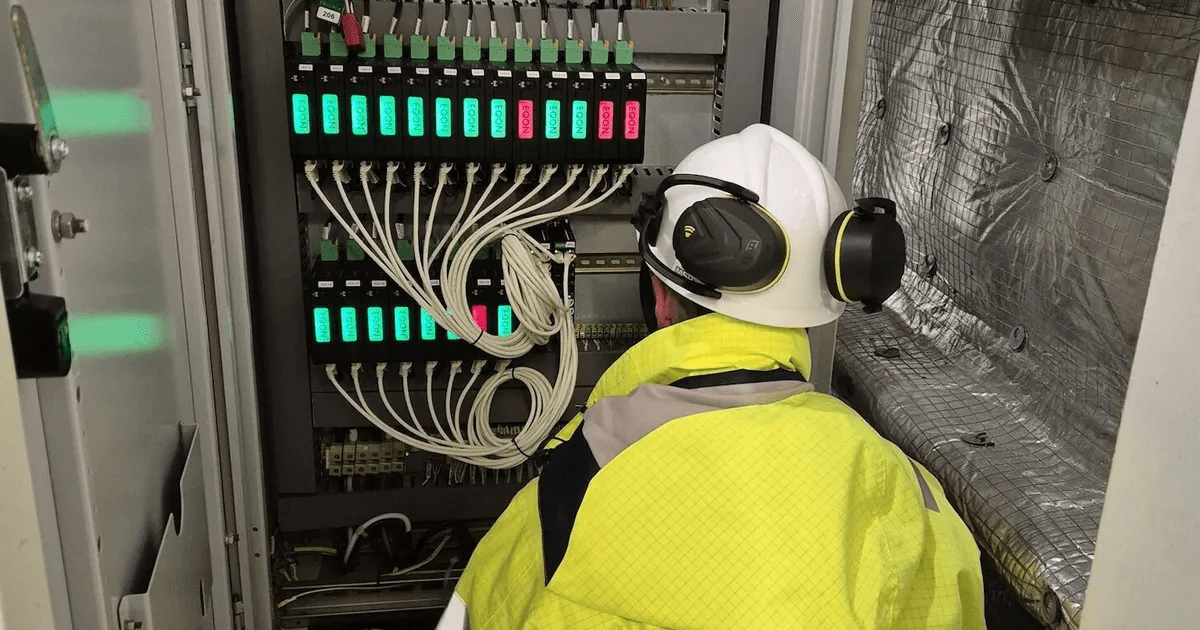
Just as important, the system is built to be adopted. It ships as a compact, DIN-rail mounted unit that a standard electrician can install, works in both new builds and retrofits, and connects to a cloud platform for remote monitoring and fault detection.
The proof is already on the ground
EQON's first product is focused on heat trace cables: unglamorous but critical infrastructure used across cold-climate industries to prevent freezing and maintain process temperatures. It is a segment with clear, recurring pain points around energy cost, equipment failure and mounting pressure to decarbonize.
A pilot for the municipality of Stavanger cut annual electricity consumption on its heating cables by 84 percent. At Nordic Pharma, EQON held stable process temperatures and removed the frozen-pipe interruptions that used to disrupt a strictly regulated production line. And in offshore drilling, its largest commercial delivery to date went to COSL, a proof point that the technology can meet the standards of one of the most safety- and quality-conscious industries there is.
A foothold in a market built for expansion
Together, these deployments span industrial process heating, offshore and maritime operations, and municipal infrastructure, giving EQON a foothold across several genuinely difficult industrial environments at once. The same core technology can be applied to progressively larger and more varied systems, from higher-voltage industrial equipment through to boilers, HVAC and battery storage, and eventually toward coordinating fleets of heating, cooling and storage assets as flexible capacity for the grid.
A model designed to get stickier over time
EQON combines hardware with a software and monitoring layer. Because its controllers are embedded directly into critical heating infrastructure, once a customer is onboarded they are expanding into all their infrastructure assets, and many customers who start with a single application go on to expand into additional systems across the same site.
As the product line extends to larger and more diverse assets, EQON is well placed to move toward a heat-as-a-service model: managing a customer's heating and cooling infrastructure directly, and capturing additional value by aggregating that flexibility for grid balancing services.
To scale efficiently across the many markets, sectors and geographies this opportunity touches, EQON is building out distribution through installer and electrical wholesale partnerships, alongside its own direct sales effort.
A team that has done this before
EQON is led by CEO Mikal Løvik, who spent the early part of his career in Norway's offshore oil and gas industry, where he first encountered this exact problem: heating cables running at full blast around the clock, wasting energy that nobody was watching. That firsthand experience shaped the company he went on to build. He is supported by a board with deep industrial, financial and entrepreneurial experience, and a team that understands both the engineering and the commercial reality of bringing a new category of industrial hardware to market, and of doing so at scale.
Our view
EQON is going after a market that has been hiding in plain sight: a foundational layer of industrial energy use that has remained largely unchanged despite years of energy price volatility and mounting pressure to decarbonize. The technology is differentiated, the addressable market is large, and early commercial traction, from a Norwegian municipality to an offshore drilling operator, shows real customer demand across genuinely difficult industrial environments. What lies ahead is execution: building out the product line, scaling distribution, and proving the path toward a broader heat-as-a-service model, including in new markets like the United States. If EQON gets this right, it can become a default layer of intelligence underneath a large share of the world's industrial heating infrastructure.
Congratulations to Mikal and the EQON team again, and to the syndicate backing them. This is exactly the kind of overlooked, high-impact hard tech we are built to support.
This is why we invested.