All
Thought Leadership
Investor Letter 2025
In our last annual letter we somewhat euphemistically referred to 2024 as “eventful”. While things were relatively good in our little shop, the clouds seemed to be darkening over global politics and markets. We don’t mind being more on-the-nose in our look back on 2025: it was a terrible year. Mostly because our dear friend and co-founder of Climentum Capital, Malin Carlström, passed away. Even if all else had gone well in the world, this would still mark 2025 for the rubbish bin.
Alas, all else did not go well: the US seems increasingly dysfunctional and is now openly hostile to the European Union as a construct; China continues to abuse positions of market dominance while fuelling Russia with oil & gas revenues as well as (military) manufacturing capacity; and Russia is expanding the theatre of war with hybrid attacks on EU countries supporting Ukraine.
On the bright side, 2025 was a long overdue wake-up call for Europe. Even parts of the European right-wing ecosystem acknowledge some of the challenges and the importance of the European Union as something to maintain. While there is still some way to go, a deeper sense of unity seems to be emerging, paving the way for some of the more difficult decisions coming down the road - including some of the main items on Draghi’s wish list.
You might think that all of this is leading up to some bad news regarding Climentum Capital. And while it is sometimes difficult to maintain macro level optimism, the fact of the matter is that we were quite prescient with our fund thesis & strategy. Back in 2022 we did not foresee the full gold-plated splendor of Trump 2, but we did subscribe to an expected increase in geopolitical misalignment on the 10-year horizon of our first fund. This was a key driver of the decisions to
1) avoid hyped sub-sectors where future tailwinds are priced into the rounds,
2) pursue solutions that address pain points at the core of our major industries, and
3) focus on business fundamentals with value propositions that do not rely on green premiums.
Thankfully this led us to avoiding things like Direct Air Capture, ESG software platforms, and voluntary carbon market blockchain plays.
Time may change me, but I can’t trace time.
Another way to think about it: we have always been about European industrial resilience. In 2022 we talked a lot about “reducing emissions at the core of industries” - and doing that without green premiums is largely synonymous with reducing dependence on oil & gas (including from Russia) and/or increasing efficiency & competitiveness (including vs. the US and China). 70% of our portfolio fits squarely in this box. Another 20% is more focused on making supply chains more local and circular, another clear aspect of industrial resilience.
A cynic might view our new tagline “Backing hard tech for a new Europe” as opportunistic leverage of prevailing narrative winds. We think of it as a chance to say more clearly what we meant all along.
Indulging in a moment of deeper navel-gazing, 2025 saw the addition of three new companies to the portfolio. Early in the year was Scale Energy: building Europe’s largest decentralized battery storage network on under-utilized industrial grid connections. Since our investment the company has made huge progress with €25m secured in infrastructure financing and >400MW worth of projects signed.
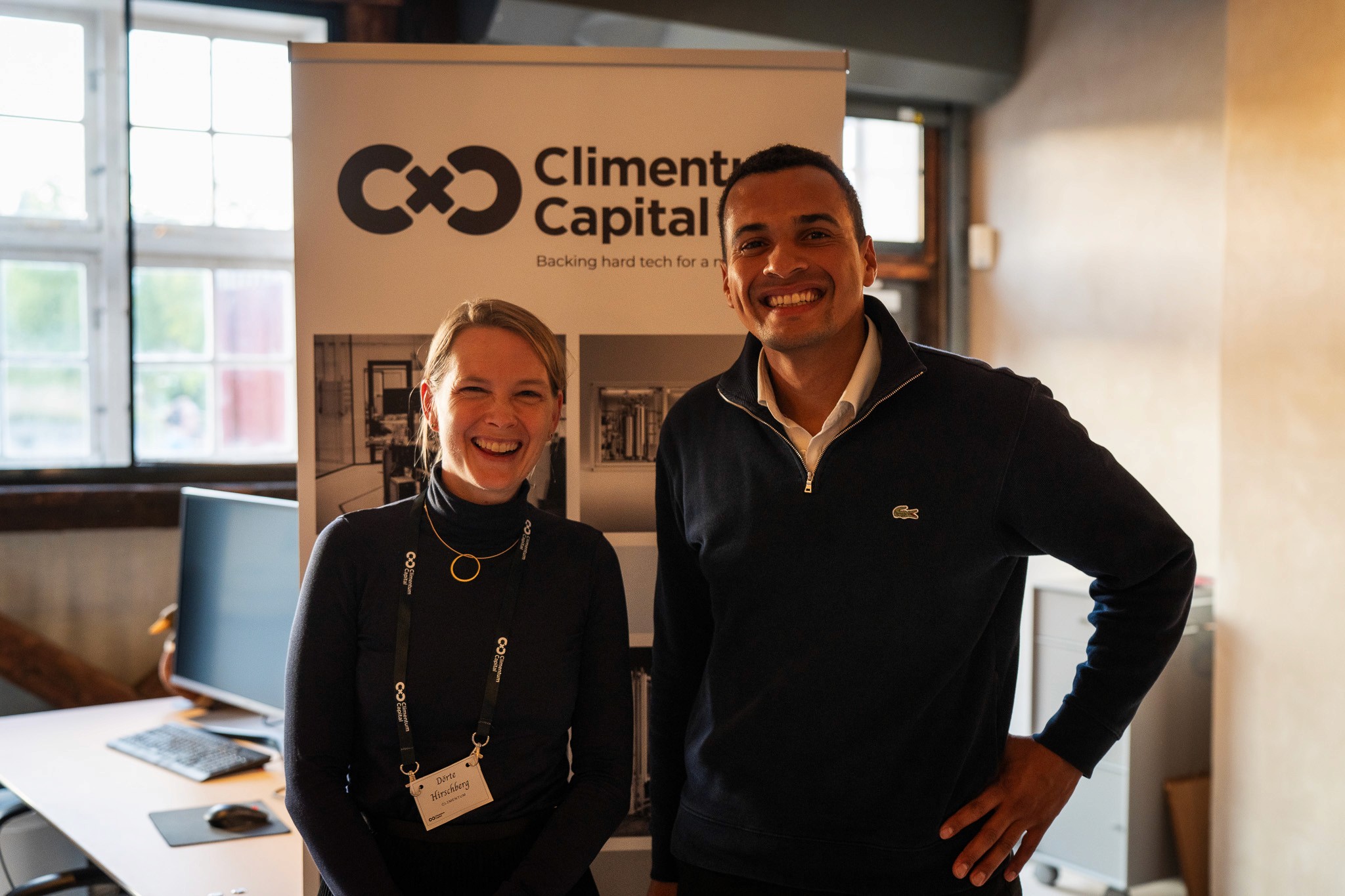
Over the summer we then invested in Enerin: displacing fossil fuel boilers with highly performant industrial heat pumps based on the Stirling engine concept, delivering clean heat up to 250°C and reducing energy costs. It was a true pleasure to co-lead this now oversubscribed round and to see the company perform on initial milestones like onboarding key C-Level hires.
Finally, here in December, we invested in Rail-Flow: a digital platform bringing major efficiency gains to rail logistics. Acting as an ERP for rail, Rail-Flow streamlines operations from order-to-cash and fleet management to AI-powered ETA predictions. Rail is often overlooked, but with a 90% lower carbon footprint vs, road transport, it is not only more sustainable, but also the backbone of heavy industry logistics.
Across the broader portfolio, 2025 was a year of tangible progress. Several companies closed competitive follow-on rounds. Others reached important technical, regulatory, or commercial milestones. For example, Novatron continued to advance its fusion reactor program, reaching new technical milestones in plasma stability and system integration. During the year, the company reinforced its position as one of the most credible European fusion efforts and realized their Series A financing round.
Cemented with the recent finalization of their Series B round, Jolt also had a good year with strong progress on customer validation and product deployment, converting early pilots into paying customers. They also expanded from the suffering hydrogen sector to water filtration and founded a JV in the Middle East for rapid regional expansion.
Finally, following some early growing pains, Rodinia now has a clear path to scale and a strong partnership for a commercial FOAK line in Portugal. With a strengthened leadership team and board, we expect to commission the new site in 2026, allowing expectant customers to come and kick the tires and place the big orders.
Of course, no holiday season is complete without a bit of drama in the family, so our portfolio also has a few problem children that we need to contend with and - more importantly - learn from. Fermify will be the first write off in our fund. The company could not raise the required funding round and we are currently winding it down. The biggest learning is to not over-index a short-term crisis (in this case milk and casein price increases from the Ukraine war) and to religiously avoid price premiums - even during the scale up phase.
We should also mention Continuum. We had to terminate the vision to build a large-scale factory right off the bat. We have not given up on the great technology & partnerships and are working on a revival with a smaller demo site with a new team, but the biggest learning is that risk perceptions among downstream investors (especially infrastructure funders) are extremely rigid.
The stars look very different today.
Zooming out again, 2025 has been defined by extremes. On the one hand, AI-enabled companies have attracted unprecedented capital, often decoupled from defensibility or long-term cash generation. On the other hand, capital-intensive ventures addressing real-world problems have faced heightened scrutiny and slower fundraising.
This is not a new phenomenon, but it has rarely been this pronounced. What makes today different is that the underlying structural drivers for climate hard tech have only strengthened. Energy and resource sovereignty have become strategic priorities, de-globalisation and supply chain reconfiguration are reshaping industrial decision-making, and climate policy in Europe, while imperfect, remains directionally stable and increasingly aligned with industrial competitiveness.
In this environment, climate hard tech is undercapitalised relative to its importance. Unlike software or AI narratives, the early-stage market is not overheated. Valuations remain rational. Entry points remain attractive. And the industrial pull is tangible. We believe this imbalance will not persist indefinitely. But while it does, it creates a compelling opportunity for long-term, thesis-driven investors.
Thus, as we make the final initial investments in Fund I and prepare to deploy from Fund II, we are sharpening our views on the relevant macro sectors. For example, with regard to energy, we are increasingly looking to sub-sectors and solutions that are aligned with the rising demand for compute capacity. Having placed our bets in fission and fusion, we are shifting focus to value chain plays and next-gen alternatives. Storage has also moved to the fore, as we see especially heat storage poised for large-scale commercialization. For renewables, we are keeping our eyes open for next gen (deep) tech opportunities and business model innovations to service large niches.
For the manufacturing sector we continue to focus on technologies that increase resource efficiency and decrease energy consumption, looking for strong commercial value propositions with modest CapEx needs. Waste streams as feedstock for new materials at low cost also remains an attractive area, especially for critical raw material outputs.
Turn and face the strange.
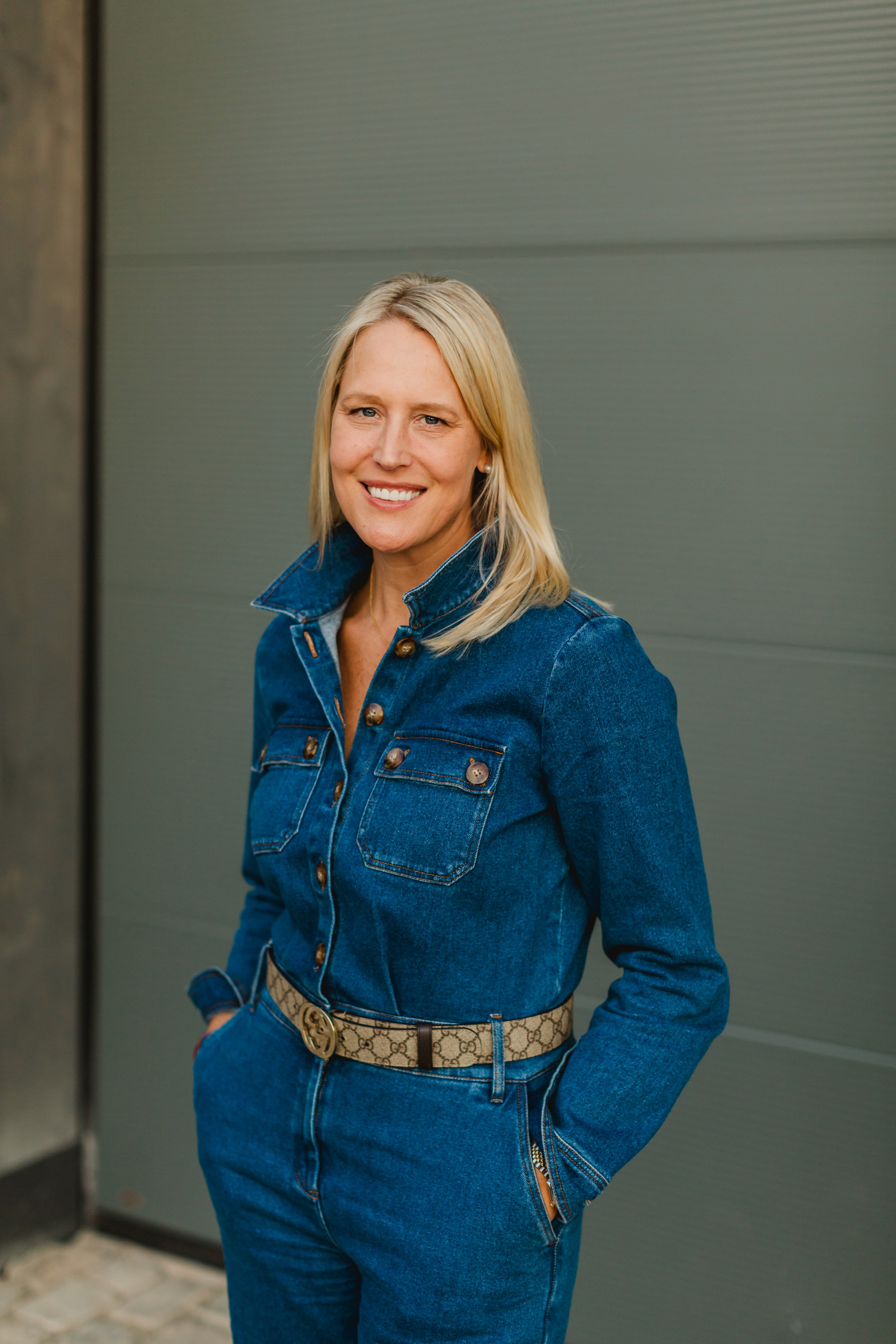
Looking more squarely at the upcoming Fund II, it is evident that the landscape has shifted. Climate is no longer viewed only through the lens of ESG. It is increasingly seen as a pillar of strategic resilience. We’re launching our new fund at a moment when the broader market is moving towards the space we’ve been building all along. And with the recent addition of Jennifer as our new General Partner, we feel particularly well positioned to take Climentum to new heights.
We remain optimistic, not because we ignore the challenges, but because we see the strength of what is being built. Europe needs new infrastructure. Climate hard tech is how it will be built. And the companies that will lead this transition are being formed right now. Having said that, we are under no illusions. Exit markets are uncertain and capital remains cautious. Everyone is nervous. Valuations reflect fear. For long-term investors, that is often the right moment to act.